The ancient Maya world did not stop at modern borders. It sprawled across what is now Mexico, Belize, Guatemala, Honduras, and El Salvador, leaving behind thousands of cities, temples, and sacred places. Yet for most travelers, Maya archaeology means one thing: the famous Yucatan circuit of Chichen Itza, Tulum, Uxmal, and Coba, visited by millions every year from the resorts of Cancun and the Riviera Maya.
Just to the south, Belize holds an astonishing concentration of Maya sites of its own, and the experience of visiting them could hardly be more different. If temples and ancient cities are the heart of your trip, here is an honest comparison of what each side of the border offers, and why many Maya enthusiasts come away calling Belize the connoisseur’s choice.
The Yucatan Circuit: Icons at Scale

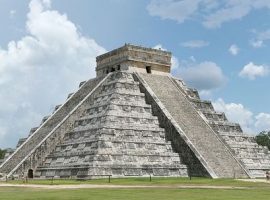
Credit where due: the Yucatan’s headliners are spectacular. Chichen Itza is a global icon for good reason, with El Castillo’s astronomical precision and the great ball court ranking among the wonders of the ancient Americas. Uxmal’s Puuc architecture is exquisite, Tulum’s clifftop setting above the turquoise Caribbean is unforgettable, and the sheer infrastructure of the circuit, with its highways, guides, and tour options, makes visiting easy for anyone.
That fame comes with trade offs. The marquee sites absorb enormous daily crowds, with tour buses arriving in waves from the resort corridor and vendor stalls lining the walkways at Chichen Itza. Climbing is prohibited at the famous structures, so the pyramids are experienced from behind rope lines, through a camera, often alongside thousands of fellow visitors. The sites are magnificent. The experience is managed.
Belize: The Maya World With the Ropes Taken Down

Belize sits in the very heart of the ancient Maya lowlands, and its territory holds hundreds of recorded sites, from great cities to hilltop centers, many still wrapped in living jungle. The difference begins the moment you arrive at one. Visitor numbers are a fraction of the Yucatan’s, so even the most popular Belizean ruins feel unhurried, and at remote sites you may share the plazas with more howler monkeys than humans.
The engagement is different too. At most Belizean sites you can still climb, touching stone stairways the Maya built and standing on summits they stood on. Guides here tend to work in small groups, turning visits into conversations rather than processions. And because so much of Belize’s archaeology remains partially excavated, you see the ancient world in every stage of revelation: cleared plazas, temple mounds still wearing their forest, and trenches where discovery is literally ongoing.
The Sites That Make Belize’s Case

Start with Caracol, Belize’s greatest city, hidden deep in the Chiquibul forest. Its massive central pyramid, Caana, still ranks among the tallest structures in Belize, and this was no provincial outpost: ancient inscriptions record Caracol defeating mighty Tikal in war. Visit on a quiet day and you can have one of the great cities of the Maya world nearly to yourself.
Then comes Xunantunich, crowned by El Castillo and reached by a charming hand cranked ferry across the Mopan River, with summit views stretching into Guatemala. Cahal Pech offers an intimate hilltop palace right in San Ignacio. Lamanai is approached the best possible way, by boat up the New River past crocodiles and orchids, and its occupation spanned an extraordinary stretch of Maya history. Altun Ha, near the coast, produced the famous jade head of the sun god, one of the treasures of the Maya world. In the deep south, Lubaantun’s unusual mortarless architecture and Nim Li Punit’s carved stelae reward travelers who venture beyond the beaten path.
And then there is the experience the Yucatan simply cannot offer: Actun Tunichil Muknal, the ATM cave, where visitors wade and swim into a sacred underworld to encounter ceramics and calcified remains resting exactly where Maya hands left them over a thousand years ago. It is regularly ranked among the greatest archaeological experiences on the planet, and it is only possible in Belize.
Setting, Wildlife, and the Journey Itself

In the Yucatan, most sites sit in dry scrub forest beside parking lots, efficient to visit and easy to combine. In Belize, the journey is part of the archaeology: river boats to Lamanai, jungle roads to Caracol through the Mountain Pine Ridge, a ferry crossing to Xunantunich. The forests around Belizean sites are alive, with toucans, howler monkeys, coatis, and orchids as your fellow visitors. You do not simply see a ruin. You travel through the same landscape that shaped the civilization, and it changes how the stones speak to you.
Advertisment

Practicalities: Crowds, Costs, and Logistics

Logistically, the Yucatan is the easier machine: bigger airports, more tours, and polished infrastructure. Belize asks slightly more intention and rewards it generously. Entrance fees at Belizean sites are modest, licensed local guides are affordable and excellent, and distances are short, with several major sites reachable from a single base in the Cayo District. Crowd management strategies are simple in Belize because there are rarely crowds to manage, while the Yucatan’s icons demand sunrise arrivals and ship schedule awareness to see them at their best. Check current fees and site rules when planning, as details change, but the broad pattern holds year after year.
The Honest Verdict

If your dream is to stand before Chichen Itza’s perfection or photograph Tulum above the sea, the Yucatan delivers icons no checklist should miss, and it delivers them efficiently. But if what you want is to feel the Maya world, to climb the stairways, hear the forest, talk with your guide in an empty plaza, and descend into a sacred cave where time stopped, then Belize is not the runner up. It is the main event. The Yucatan shows you the Maya past. Belize lets you walk into it.
Trade the rope lines for temple summits. Build your own Maya adventure through Caracol, Xunantunich, Lamanai, and the ATM cave with the site guides and itineraries at www.belizehub.com.
Featured Belize Resort
Advertisment
Featured Tour Company
Advertisment

Real Estate Opportunities
Advertisment

Comments
Advertisment

Advertisment
Advertisment

Advertisment