Belize, like many other countries throughout history, has undergone its own nationalist movement out of the desire to become a sovereign, independent state with a unique identity. The process of decolonization has played a massive role in Belize’s quest for independence, with the aim to undo the impacts of slavery, classism, poverty, and other societal inequalities. The story of Belize’s nationalist movement is very similar to that of other countries but has many of its own unique elements as well.
The Origins
Human beings have inhabited what is now called Belize for millennia. The Maya civilization thrived in the area of the Yucatán Peninsula, which included Belize as well as Guatemala, Honduras, and southeastern Mexico. The descendants of these indigenous civilizations would play a major role in the country’s movements to establish their own culture and nation.
When Europeans arrived in the Americas, the Spanish largely ignored Belize because it was remote, had terrain that was difficult to traverse, and had little in the way of gold and silver deposits. The British, however, colonized the area for its natural resources and called it British Honduras. Belize would be a British colony until the 20th century and remains a member of the Commonwealth even today.
The modern Belizean nationalist movement originated in the 1930s and 40s. It was in direct response to societal inequities brought on by colonialism and occurred at a time when similar movements were happening in other Latin American countries. Poverty and racism were exacerbated during World War I and the Great Depression, which is why the movement began to take off during this time.
It Was Largely The Product Of Three Groups
Three distinct groups truly formed and popularized the Belizean nationalist movement, beginning the attempt to remove colonial ideas and power structures from their country that had been imposed by a foreign power. They all approached many of the same ideas and aims from different angles brought on by their own perspectives.
The first group was the labor movement. In the 1930s and 40s, Belize was largely an agricultural economy, based mainly on forestry. Large segments of the population were poor and legally unable to own land. White landowners remained in power and laborers, who were the descendants of indigenous people and enslaved Africans, depended on them for work. In 1934, Antonio Soberanis Gómez formed the Labourers and Unemployed Association and led workers in a bid for better pay and better jobs. This movement in turn led to Belizeans beginning to question whether they truly benefited from being colonized by Britain, as they saw a country that had plenty of wealth and natural resources awash in poverty. This movement led to the legalization of trade unions, the creation of relief work, and other labor reforms.
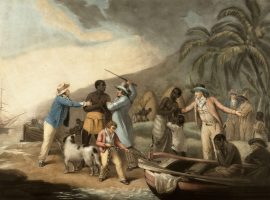
The second group consisted of a Black nationalist movement. These people were largely the descendants of enslaved people who had been brought to British Honduras as laborers. A branch of the Universal Negro Improvement Association was formed in British Honduras in 1920 and it would go on to wield significant influence over the country’s growing nationalist movement. Some Black nationalist groups were more moderate, insisting they were loyal British subjects who simply wanted better standards of living and greater freedoms, while others were more radical and pushed for the expulsion of all whites to form a republic of their own. These movements ultimately further advanced the idea that Belize should become its own republic.
The third group was largely spearheaded by the Christian Social Action Group, which won control of the Belize City Council in 1947 through electoral victory. This group engaged more in established politics, working within the narrow confines of the system to enact its agenda and push for change. They wanted greater rights and prominence for native Belizeans and a government that was more representative of the people as a whole.
Advertisment

Belizean Independence Achieved
Like many other former colonies of the British Empire, Belize’s march towards independence was several decades in the making as it took incremental steps towards greater self-determination. Voting rights were a particularly contentious issue because the wealthy and middle classes benefited from the colonial system and were not in favor of universal suffrage. The push for voting rights gained enough popularity that it was eventually enacted in 1954.
In 1964, the British Empire granted British Honduras self-rule, and the country was officially renamed Belize in 1973. Belize finally achieved full independence on September 21, 1981.
Guatemala disputed Belize’s sovereignty, claiming that Belize was actually part of Guatemala and refused to recognize the new country’s existence. Britain left troops in Belize to safeguard the fledgling nation against potential invasions by Guatemala, not removing them until 1994. Tensions between the two nations about their border continued into the 2000s, but Guatemala never invaded Belize in an attempt to claim it. The two countries have cooperated in other areas but maintain a more terse relationship than Belize has with its other neighbor, Mexico.
Featured Belize Resort
Advertisment

Featured Tour Company
Advertisment

Real Estate Opportunities
Advertisment

Comments
Advertisment

Advertisment
Advertisment

Advertisment