Once a year, before dawn on 19 November, canoes appear off the coast of Belize. They carry drums, cassava, plantain, and the yellow, black, and white flags of the Garifuna people, and as they come ashore to waves of drumming and song, they reenact one of the most stirring stories in the Caribbean: the arrival of the Garifuna on these shores. This is Garifuna Settlement Day, a national holiday, a homecoming, and hands down one of the most powerful cultural experiences a traveler can witness anywhere in the region.
If 19 November falls anywhere near your Belize travel window, rearrange the trip around it. Here is your complete guide to the holiday: the history behind it, where to experience it, what you will see, taste, and hear, and how to be the kind of guest the celebration deserves.
Who are the Garifuna?

The Garifuna story begins on the island of St. Vincent, where shipwrecked and escaped Africans intermixed with the Indigenous Kalinago and Arawak peoples, forging a new nation with its own language, spirituality, music, and foodways. After fierce resistance against European colonization, the Garifuna were exiled by the British at the end of the eighteenth century and cast ashore on the islands off Central America, from which they spread along the coast, carrying their culture with them in canoes. Their arrival and settlement in Belize, commemorated each 19 November, planted communities that thrive to this day in Dangriga, Hopkins, Seine Bight, Punta Gorda, and Barranco. The culture they preserved against every odd is now recognized by UNESCO, which has proclaimed Garifuna language, dance, and music a masterpiece of the intangible heritage of humanity.
The holiday and the visionary behind it

Garifuna Settlement Day owes its existence to Thomas Vincent Ramos, a beloved Garifuna leader and visionary who championed a day to honor his people’s arrival and culture. First celebrated in 1941 in Dangriga, the observance grew over the decades into the full national public holiday Belize marks today, a recognition that the Garifuna story is not a footnote to Belizean identity but one of its pillars. Ramos remains a national hero, and his name is spoken with gratitude throughout the November festivities.
The Yurumein: dawn on 19 November

The emotional heart of the holiday is the Yurumein, the dawn reenactment of the arrival. In the early light, canoes carrying drummers, singers, and the symbols of survival, cassava sticks, plantain, and young banana plants, approach the shore while crowds gather on the beach, singing and drumming them in. When the canoes land, the celebration processes through the streets to church, where mass is sung in the Garifuna language, and the day unfolds from there into music, dancing, food, and joy that lasts well into the night. Travelers consistently describe standing on that beach at sunrise as one of the most moving moments of their lives. Arrive early, stand respectfully, and let it happen to you.
Where to experience it

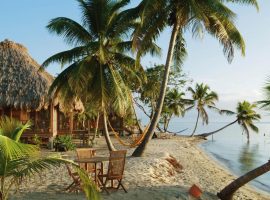
Dangriga, considered the cultural capital of the Garifuna in Belize, hosts the largest and most famous celebrations, and the town fills with visitors, parades, and drums for the occasion. Hopkins, the beloved beachside village to its south, offers an equally soulful celebration at a more intimate village scale, with its own Yurumein, street processions, and days of festivities, and it doubles as one of Belize’s best beach destinations for the rest of your stay. Punta Gorda and the southern communities of Seine Bight and Barranco carry the celebration too, each with its own character. Wherever you go, know that November is festival season across Garifuna Belize, with drumming, events, and cultural activities building for days before the holiday itself.
The sound: drums, punta, and paranda

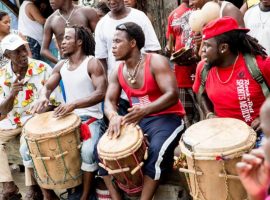
Garifuna music is the celebration’s heartbeat, quite literally. The segunda and primero drums lay down the rhythms that power punta dancing, the electrifying, hip driven dance the Garifuna gave the world, while paranda brings soulful guitar ballads and hungu hungu carries processions along. Expect drumming circles that anyone with rhythm and respect may be welcomed into, dancing in the streets, and performances that run from sacred to celebratory. Several villages have drumming schools and cultural centers where visitors can learn the basics from masters in the days around the holiday, one of the best cultural souvenirs Belize offers.
The table: hudut, cassava, and celebration food

Come hungry, because Settlement Day feeds its guests unforgettably. The dish of the season is hudut, fresh fish simmered in rich coconut broth and served with mashed plantain, comfort food elevated to art. Cassava bread, the ancestral staple whose preparation is itself a cultural ceremony, appears alongside sere, coconut fish soup, darasa, the green banana tamales, and sweets and drinks that carry the flavors of the culture. Street stalls, village kitchens, and local restaurants all rise to the occasion during the festivities. Say yes to everything at least once.
Advertisment

How to be a good guest

The Garifuna welcome visitors to Settlement Day with extraordinary generosity, and travelers should return the courtesy. Remember that beneath the music and feasting, this is a commemoration of survival, faith, and identity: attend the Yurumein and any church services as a respectful observer, ask before photographing people, especially elders and ceremonies, and follow the lead of your hosts on when to watch and when to join. Spend your money with Garifuna owned businesses, guides, drum makers, and cooks, learn a greeting or two, and accept invitations with gratitude. Guests who show up with humility find themselves welcomed like family.
Planning your trip
November is a glorious month to visit Belize in any case, with the green season handing over to dry weather, and Settlement Day gives it a crown. Book accommodations in Dangriga or Hopkins well in advance, since the holiday draws visitors from across the country and the diaspora, and plan to arrive at least a day or two early to enjoy the buildup of drumming nights and cultural events. Confirm event schedules locally when you arrive, keep your dawn free on the nineteenth, and build in beach or jungle days around the celebration, since the reef, the rivers, and the jaguar country of the south all sit within easy reach of the festivities.
Stand on the sand at sunrise and watch a nation come home. Plan your Garifuna Settlement Day journey, from Dangriga drums to Hopkins hudut, with the culture and travel guides at www.belizehub.com.
Featured Belize Resort
Advertisment

Featured Tour Company
Advertisment

Real Estate Opportunities
Advertisment

Comments
Advertisment

Advertisment
Advertisment

Advertisment