Henry Edward Ernest Victor Bliss, the 4th Baron Bliss, but far more commonly known as just Baron Bliss, came into the world in Marlow, Buckingham, England on February 16th, 1869. While he was born a de Barreto, his father, Henry Aldrige inherited the Bliss estate from relative and known gunsmith Edward Bliss, and thus the family name became Bliss. By 1855, Henry Bliss became the owner of the estate and title after his cousin Baron de Alreyo of Portugal but he went by the title Baron de Bliss due to family obligations. In June of 1869, Henry was given another bequest from Spain’s Colonel Carlo Antonio Barreto and this involved changing his name to Berreto, which Henry agreed to.
Little is known of Baron Bliss’ early years beyond the knowledge that he had a brother. Prior to his brush with the Baron de Alreyo, Henry had worked as an engineer and Justice of the Peace. Although he married, his union with Ethel Alice Bliss yielded no offspring. It is understood that Bliss received his Barony through family ties to the war hero Sir John Moore.
Jumping ahead to the early 1900s, Bliss had prospered well enough to retire and live out the rest of his days as a sailor and fisherman. Unfortunately, Bliss succumbed to paralysis in 1911, rendering the 42-year-old man wheelchair-bound, likely due to polio. Despite having no use of anything at the waist and below, he remained active as a yachtsman and would leisurely drive his yacht, the Sea King, about the United Kingdom’s waters.
Once World War I flared up in 1914, the Sea King had been commandeered by the British crown for use in the water, leaving Baron Bliss to commission a successor, the Sea King II, after the war. Completed in 1920, Sea King II was engineered for tropical waters as the Baron had no more interest in being close to England and chose to set sail for the Bahamas.

Bliss spent five years in the Bahamas, living aboard the vessel and also spending time within New Providence’s Dumore House. While he also bought property on the islands, it remains unclear if he had ever planned to settle there.
Bored with the socializing and management that his tropic living had become, Bliss decided that he needed to shake things up. He considered Trinidad but the combination of the local atmosphere and a rather nasty bout of food poisoning soon after making port soured his interest in the island. Bliss’ friend, Attorney General Willoughby Bullock, inspired him to visit British Honduras, now known as Belize; after a brief medical trip to Jamaica, the Sea king II dropped anchor in Belize City’s harbor on January 14th, 1926.
After landing, Bliss’ health seemed to greatly improve. The man took every chance he could to explore his small launch for fishing, visiting the cayes and the Belize Barrier Reef. Roughly a month later, doctors discovered that Bliss’ health was in dire straights. Bliss asked Belize’s governor, Sir John Burdon, to see him on the Sea King II. After agreeing to see Bliss, Burdon was given Bliss’ last wishes; most of the Bliss estate was to be given to the country now known as Belize. On February 17th, one day after turning 57, Bliss’ last will and testament was signed and notarized. On March 9th, 1926, Bliss died without ever setting a foot on Belize’s soil.
The Baron Bliss Trust
Bliss’ will stipulated that a trust fund would be enacted and clarified who its main bankers would be. This trust fund was to ensure that Bliss’ money and all of the income generated by his principal investment would further Belize and all its citizens. The principal, which was mostly composed of British stocks, securities, and deposits, was never to be touched and its value is equivalent to $800,000 USD. Only the interest from this fund is to be spent, and even then, only on agricultural or vocational pursuits. Curiously, the clauses forbid Americans from ever being trustees or employees of trustees.
Advertisment
Another portion of the trust is dedicated to an annual regatta honoring the Baron. While this regatta is the focus of Baron Bliss Day in Belize City, other towns hold small boat races or parties.
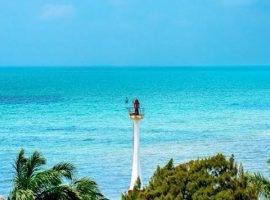
One last section of the will instructed that Bliss be permanently interred in a granite tomb close to the sea, with an iron fence surrounding the grounds and a nearby obelisk or lighthouse also be constructed. The Baron Bliss Lighthouse continues to serve as a welcome to Belize’s visitors and a memorial to one of the most generous men the country has ever seen.
Bliss’ tomb bears an inscription that mentions his birth and death dates, the name of his beloved yacht, and ends by calling him “a generous benefactor of [Belize].”
Featured Belize Resort
Advertisment

Featured Tour Company
Advertisment

Real Estate Opportunities
Advertisment

Comments
Advertisment

Advertisment
Advertisment
Advertisment