The story of Nora Parham could have been a juicy true crime story in its own right, but the larger social and political context of her prosecution transforms her story into something far larger. She remains the only woman to have been executed inBelize’s history, after being convicted of murdering her partner, Ketchell Trapp by lighting him on fire. But as a woman of South Asian descent in a partnership with a documented abuser who was also a constable in the British Honduras Police Force, the circumstances became political kindling.
It was 1963, and Belize was still known as British Honduras. Nora Parham hardly bore the demeanor of a killer. She stood at a mere four feet and eight inches and weighed only 118 pounds at the time of her arrest. On February 6, 1963, Parham and Trapp got into an argument at the home they resided in. These incidences were not uncommon, and Parham had reached out to police on multiple occasions about his domestic abuse and drunkenness to little response. Trapp caught on fire in the couple’s outhouse, though the police accounts differed from those of Parham. While she admitted to pouring gasoline on Trapp, police claimed that she lit the fire herself while she claimed that he accidentally immolated lighting a cigarette. In the resulting blaze, burns claimed 90% of his body, and he died the next day.
Given the circumstances surrounding the crime, Parham’s trial became a contentious subject in the days to follow — and the manner in which the trial was conducted did little to assuage the fears of those sympathetic to Parham. The entire trial was settled in less than three months, and the all-male jury deliberated for only four hours before settling on a guilty verdict. Despite the jury’s explicit request for mercy, the judge sentenced Parham to death. Under the law of British Honduras, there were no formal means to appeal — but plenty still fought for her justice. A petition asking for clemency in Parham’s execution reached the governor’s desk with 2,461 signatures, but he rejected it.
The speed with which the case was settled alarmed many, but little time was available to even pursue clemency. The People’s United Party supported the verdict in the Nora Parham case out of a desire to not undermine the authority of the courts, but the National Independence Party pushed hard for a pardon. Ultimately, the PUP’s stance would win out. It wouldn’t take long either. On the morning of June 5, 1963 — barely four months after the death of Trapp — Nora Parham was hanged.
Advertisment

Vigils preceded the execution, and tensions were high as police worried about rioting and revolts. Ultimately, she was buried in an unmarked grave with an attendance of roughly two thousand. Parham would continue to be a touchstone in conversations about how justice should be handled in the British Honduran courts and what direction the state should go, but she also left behind a genealogical legacy. Parham’s execution at the age of 36 left her eight sons without a mother.
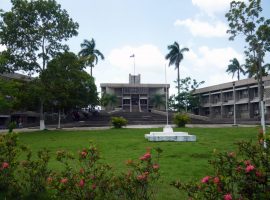
But the sons who survive today will have the chance to take one more step closer to closure. Belize’s House of Representatives voted on May 13 to pardon Parham for the murder of Trapp. Minister of Human Development, Families, and Indigenous People’s Affairs, Dolores Balderamos-Garcia introduced the motion which both pardoned her for her crimes and came accompanied by formal apologies from members of the Opposition, despite the fact that the party would not appear until a decade after Parham’s execution.
The motion passed with no opposition, a clear sign of changing sensibilities. While Parham’s execution sparked outrage in its time, the full-throated endorsement of this latest motion makes clear that more attention — and more sympathy — is being turned towards victims of domestic violence. Parham’s remaining sons are preaching healing and peace, and there’s hope that the attention this pardon brings to the issues of domestic violence might lead to a stronger focus on public education surrounding the issue. And while this pardon isn’t accompanied by reparations for the family, it does clear the name of a mother and create a more encouraging environment for other victims to come out against their abusers.
Featured Belize Resort
Advertisment
Featured Tour Company
Advertisment

Real Estate Opportunities
Advertisment

Comments
Advertisment

Advertisment
Advertisment

Advertisment